
Why Kitchen Tools Can Feel Less Comfortable Over Time
A kitchen tool may feel good when someone first picks it up
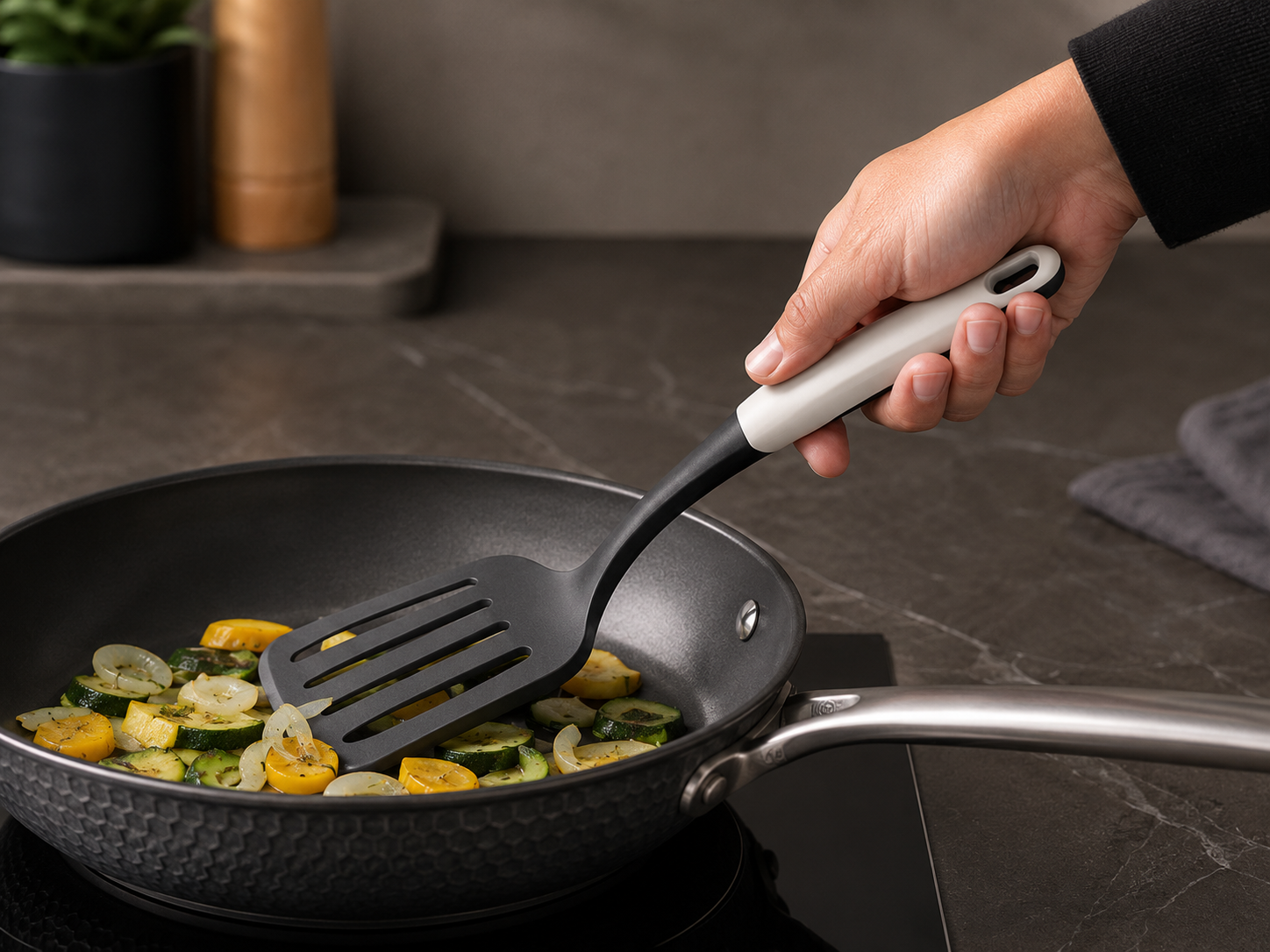 The handle feels smooth. The weight seems reasonable. The grip feels secure. In a sample room, at a trade show, or during a short product review, there may be no obvious problem.
 The handle feels smooth. The weight seems reasonable. The grip feels secure. In a sample room, at a trade show, or during a short product review, there may be no obvious problem.
But daily kitchen use is different.
A spatula may be used for a long time while stirring a thick sauce. A whisk may be held firmly through several batches of batter. A pair of tongs may be opened and closed repeatedly during grilling, serving, or food preparation.
After repeated use, small comfort problems begin to appear.
That is why kitchen tool comfort should not be judged only by the first touch. It should also be judged by how the product feels after real use, repeated movement, washing, and long cooking sessions.
A Good First Impression Does Not Always Mean Long-Term Comfort
Many kitchen tools are evaluated quickly.
A buyer may hold the product, check the surface finish, look at the packaging, and test the movement once or twice. This is normal. In sourcing, retail, and product development, decisions often need to move efficiently.
But a tool that feels comfortable for a few seconds may not feel the same after several minutes of use.
Some comfort issues only become clear when the same action is repeated many times. Stirring, scraping, flipping, lifting, squeezing, and gripping can reveal pressure points that are easy to miss during a short inspection.
A handle edge that feels neat at first may begin to press into the palm. A narrow grip may force the hand to work harder. A tool that looks balanced on the table may feel heavy at the front during cooking.
At Dingrow, we have found that many comfort issues are not obvious at the beginning. They start quietly, then become more noticeable through repeated use.
Hand Fatigue Often Builds Slowly
Handle fatigue is not always easy for users to explain.
They may not describe the problem with technical words. Instead, they may say:
“It feels tiring to use.”
“My hand gets uncomfortable.”
“The grip does not feel natural.”
“I do not use this tool as often as the others.”
That last point is important.
Consumers do not always return a kitchen tool because it feels uncomfortable. Sometimes they simply stop using it. The product moves to the back of the drawer, even if it still looks new.
For kitchenware brands and retailers, this matters because comfort affects repeat purchase, product trust, and long-term user satisfaction. A tool does not need to break to disappoint the customer. It only needs to feel less comfortable than expected.
Handle shape plays a major role.
If the handle is too thin, the hand needs more effort to control the tool. If it is too thick, users with smaller hands may find it difficult to hold. If the surface is too smooth, the user may grip harder without noticing.
That extra effort gradually becomes fatigue.
Grip Performance Changes in Real Cooking Conditions
A clean, dry hand is not the best test for a kitchen tool.
In real kitchens, hands are often wet, oily, warm, or covered with flour. Tools are used near steam, sauces, oil, dishwashing water, and heat. These conditions change how the grip performs.
A kitchen utensil grip needs to remain stable under imperfect conditions.
A polished handle may look premium, but it can become slippery during use. A soft-touch coating may feel pleasant at first, but if the texture is too shallow, it may not provide enough control. A silicone grip can improve comfort, but only when material hardness, surface texture, and handle shape work together properly.
Common grip problems include:
Handles that rotate slightly in the hand
Surfaces that become slippery when wet or oily
Edges that create pressure near the fingers
Grip materials that feel sticky, rough, or worn after repeated washing
These issues are not always visible in product photos or short sample reviews.
They appear when someone is actually cooking.
Weight Balance Has a Strong Effect on Usability
Handle design is important in ergonomic kitchen tools.
But balance is just as important.
A kitchen tool can have a comfortable handle and still feel tiring if the weight distribution is not well controlled.
For example, a ladle with a heavy bowl and a light handle may pull downward during use. A pair of tongs with too much spring tension may make the hand work harder. A silicone spatula with a thick head may feel strong, but it can become tiring if the handle does not support the extra weight properly.
Balance becomes more noticeable during longer cooking tasks.
If a user flips food once, the issue may not matter. But when they are preparing a full meal, cooking for a family, or working through several dishes, the hand starts to feel every small imbalance.
This is where long-term kitchen tool usability becomes different from simple visual appeal.
The product needs to feel natural not only on the shelf, but also during real movement.
Small Production Details Can Change the User Experience
Comfort is not only decided by design.
Manufacturing details also affect how a kitchen tool feels.
Two products may follow the same drawing, but they can still feel different in the hand. This may be caused by material selection, molding quality, polishing, assembly tolerance, coating consistency, or finishing control.
For example, a slightly raised handle seam may create irritation. A metal edge that is not polished smoothly may feel sharper than expected. A silicone part that is slightly too hard may reduce comfort during scraping, stirring, or gripping.
These details are subtle.
But users feel them.
Practical production factors that affect comfort include:
Material hardness and flexibility
Mold consistency and surface texture
Assembly gaps between the handle and working head
Edge finishing and polishing quality
Coating thickness and surface feel
Handle seam control
Tolerance consistency across mass production
For product developers and sourcing managers, this is why sample approval is only one part of the process. The approved sample may feel comfortable. The real question is whether mass production can repeat the same feeling consistently.
That is often the harder part.
Repeated Washing Can Change the Feeling of a Tool
A kitchen tool may feel comfortable when new, but repeated washing can slowly change the user experience.
Dishwasher heat, detergent, water pressure, moisture, and drying cycles can affect surfaces, coatings, and joints. Some handles become rougher. Some coatings lose their original touch. Some material connections become less tight over time.
The product may still be considered dishwasher safe in a basic sense. It does not crack, melt, or fail immediately.
But comfort can still decline.
This distinction matters.
A kitchen tool can remain functional while becoming less pleasant to use.
For brands and buyers, long-term product testing should not only ask whether the tool survives washing. It should also ask whether the grip still feels comfortable, whether the handle remains secure, whether the balance stays stable, and whether the surface still feels clean and pleasant in the hand.
That is the difference between basic durability and real usability.
Long-Term Comfort Comes From Many Small Decisions
Kitchen tools are everyday products.
Because they are used so often, comfort is easy to underestimate.
A small handle curve, better grip texture, improved weight balance, smoother edges, more suitable material hardness, or more stable surface finishing may not sound exciting in a product brief. But these details are what users feel after weeks or months of cooking.
At Dingrow, we have noticed that good kitchen tools usually do not draw attention to themselves. They simply feel easy to use. They do not make the hand work harder than necessary. They do not become annoying after long cooking sessions or repeated washing.
For kitchenware brands, private label buyers, and retailers, this is where product refinement becomes valuable.
The goal is not to make every tool look more complicated.
The goal is to make everyday use feel more comfortable, more stable, and more considered.
Long-term comfort is rarely created by one big feature.
It is usually the result of many small decisions working together.


