
Why Smaller Kitchen Tool Sets Are Becoming More Attractive to Buyers
For many years, large kitchen tool sets seemed like the safer choice.
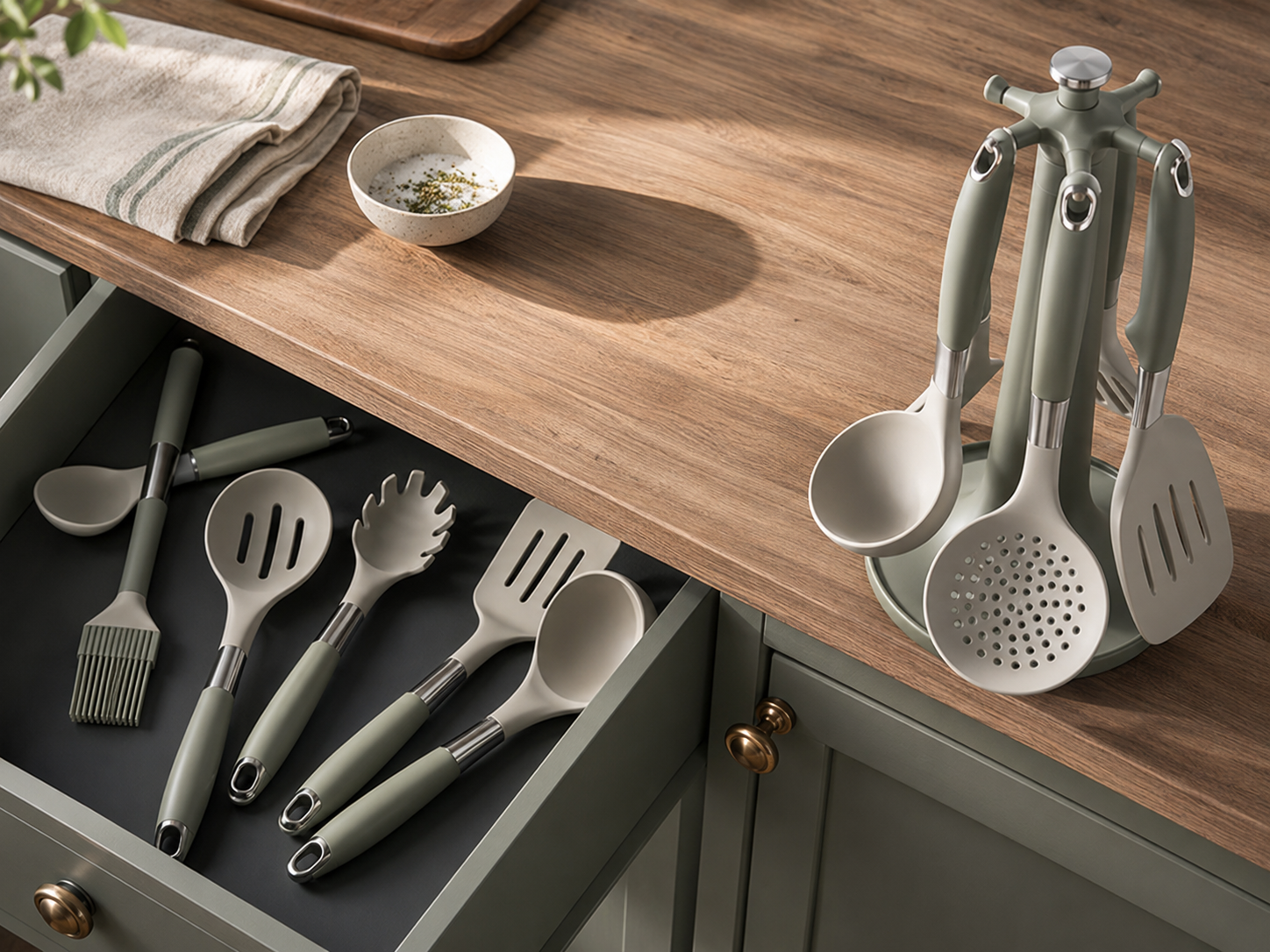 More pieces suggested more value. More functions made the product look more complete. A bigger package often appeared easier to promote on a retail shelf or an online product page.
A 15-piece utensil set looked more impressive than a 5-piece set. A full drawer of tools seemed to offer a complete cooking solution. For seasonal gifts, promotional bundles, and private label programs, large assortments often felt like the natural direction.
But consumer expectations are changing.
Many shoppers are no longer only asking, “How many pieces are included?”
They are asking a more practical question:
“Will I really use all of them?”
That question is reshaping how kitchenware brands, retailers, sourcing managers, and product developers think about kitchen tool assortments.
Modern Kitchens Have Less Room for Unused Tools
Today's kitchens are often limited in space.
Many consumers live in apartments, smaller homes, or shared spaces. Countertops are already full. Drawers are crowded with utensils, storage lids, measuring spoons, clips, peelers, and tools that were bought once but rarely used again.
This is one reason compact kitchen tools are gaining more attention.
Consumers are not only buying products.
They are trying to protect their kitchen space.
A large utensil set may look attractive in packaging, but once it enters the home, the user experience can be very different.
The consumer may start asking:
Where should I store all these tools?
Which pieces will I actually use every week?
Why do several tools seem to perform almost the same function?
Does this set make my kitchen easier to organize, or does it create more clutter?
That final question is becoming more important.
A kitchen tool set should make cooking feel simpler. If it makes the drawer harder to manage, the value of the set starts to weaken.
Large Sets Can Look Valuable but Feel Wasteful Later
Large kitchen tool sets often create a strong first impression.
They look generous. They fill the package well. They give retailers more product to display. For e-commerce, the product image can look complete, rich, and highly functional.
But after purchase, the customer experience becomes more realistic.
Some tools are used often.
Others are barely touched.
A consumer may use the spatula, tongs, peeler, and whisk every week. But the melon baller, small specialty scraper, unusual serving fork, or extra accessory may stay in the drawer for months.
This may not always lead to a direct complaint.
But it can still affect how the customer remembers the purchase.
If many pieces feel unnecessary, the set may begin to feel wasteful. When that happens, repeat purchase becomes harder.
At Dingrow, we have observed that buyers are paying more attention to this point. A larger set is not always a stronger product. In many cases, a smaller set with a clearer usage purpose can feel more valuable because every piece has a reason to be included.
Curated Sets Are Easier for Customers to Understand
A smaller, well-selected kitchen tool set usually tells a clearer story.
It does not try to cover every possible cooking task. Instead, it focuses on a specific need, routine, or kitchen scenario.
For example:
A 4-piece everyday cooking set with a spatula, spoon, turner, and tongs
A compact baking preparation set with a scraper, whisk, measuring cups, and pastry brush
A small food preparation set with a peeler, grater, slicer, and garlic press
A nesting measuring set designed to save drawer space
These products are easier for consumers to understand quickly.
They also create a cleaner retail presentation.
Retailers have limited time and space to explain a product. Whether the customer is walking past a shelf or scrolling through an online product page, the product message needs to be understood within seconds.
Smaller sets often communicate that message more clearly.
They give the buyer a focused idea:
“This set is for everyday cooking.”
“This set is suitable for small kitchens.”
“This set is designed for baking preparation.”
“This set helps save drawer space.”
This kind of clear positioning also helps buyers. It makes the product easier to price, easier to merchandise, and easier to compare with other items in the category.
Multifunctional Design Works Best When It Feels Practical
The growing interest in multifunction kitchen tools does not mean every tool needs to perform many unrelated tasks.
In fact, consumers may be cautious when a product promises too much.
A tool that claims to slice, peel, grate, chop, open, scrape, and serve may sound efficient at first. But if the function is not easy to understand, the product can feel confusing rather than useful.
A better approach is often more practical and natural.
For example:
A nesting measuring cup set that stacks neatly and saves space
A compact grater with multiple usable surfaces
A peeler that works comfortably with different ingredients
Locking tongs that close neatly for easier storage
A scraper that can also help transfer chopped ingredients
These are not overly complicated innovations.
They are useful improvements that fit real kitchen habits.
For product developers, the key question is not only, “Can we add another function?”
The more important question is:
“Does this function make the tool easier to use, or does it make the product more complicated?”
That difference matters, especially for private label kitchenware projects. Buyers need products that consumers can understand quickly, use repeatedly, and trust in daily cooking.
Minimalist Kitchenware Is About Better Selection
Minimalist kitchenware is sometimes understood only as a visual style.
Neutral colors. Clean packaging. Simple shapes. Calm lifestyle photography.
These details can be important. But for kitchen tools, minimalism is not only about appearance.
It is also about removing unnecessary items.
A smaller tool set can still feel complete if the selection is thoughtful.
For example, a 5-piece set may perform better than a 12-piece set if those five tools match real cooking habits more closely. The consumer may feel that the brand understands their kitchen better.
That creates a different kind of value.
Not more pieces.
Better choices.
This is where sourcing and product development become more strategic. It is not enough to select several tools from a catalog and combine them into one package. The assortment should reflect how people actually cook, clean, store, and repeat their daily routines.
At Dingrow, this is often part of the discussion with brands and buyers. The goal is not always to create the largest set. Sometimes the better direction is to refine the assortment until it feels more useful, more organized, and more suitable for everyday kitchens.
Smaller Sets Can Make Retail Decisions Easier
For retailers, smaller kitchen tool sets can offer several practical advantages.
They are easier to display. They take up less shelf space. They can be positioned around specific consumer needs instead of simply promoting the number of pieces.
A compact set may also reduce purchase hesitation.
A shopper may think twice before buying a large box of utensils if they are unsure where to store it. But a smaller, well-edited set feels easier to bring home and easier to use immediately.
For sourcing managers and private label buyers, this trend changes how kitchenware products are evaluated.
The discussion is moving away from:
“How many pieces can we include at this price?”
And moving toward a more useful question:
“Which pieces will the consumer actually use?”
This shift can influence many product decisions, including:
Product selection
Packaging size
Retail pricing
Shelf layout
Online product images
Repeat purchase potential
It can also affect reviews and return risk.
When a kitchen tool set feels practical, consumers are more likely to use it often. When they use it often, they are more likely to remember the brand positively. That memory can matter when they make their next purchase.
The Strongest Set Is the One With a Clear Purpose
Large kitchen tool sets will not disappear.
They still have value in gift programs, starter kitchen packages, promotional bundles, and certain retail channels.
But the idea that “more pieces always means better value” is becoming less reliable.
Many consumers now prefer fewer tools that work better for real life.
They want drawers that are easier to organize. They want tools that justify their place in the kitchen. They want sets that still feel useful after the packaging is thrown away.
For brands and buyers, this is a quiet but important shift.
A good kitchen tool assortment is no longer only about filling a box.
It is about understanding the kitchen where the product will actually be used.
Sometimes, the strongest set is not the largest one.
It is the set where every piece has a clear purpose.


