
How Packaging Influences Kitchenware Sales and Buyer Decisions
Packaging is often considered one of the last steps in a kitchenware project
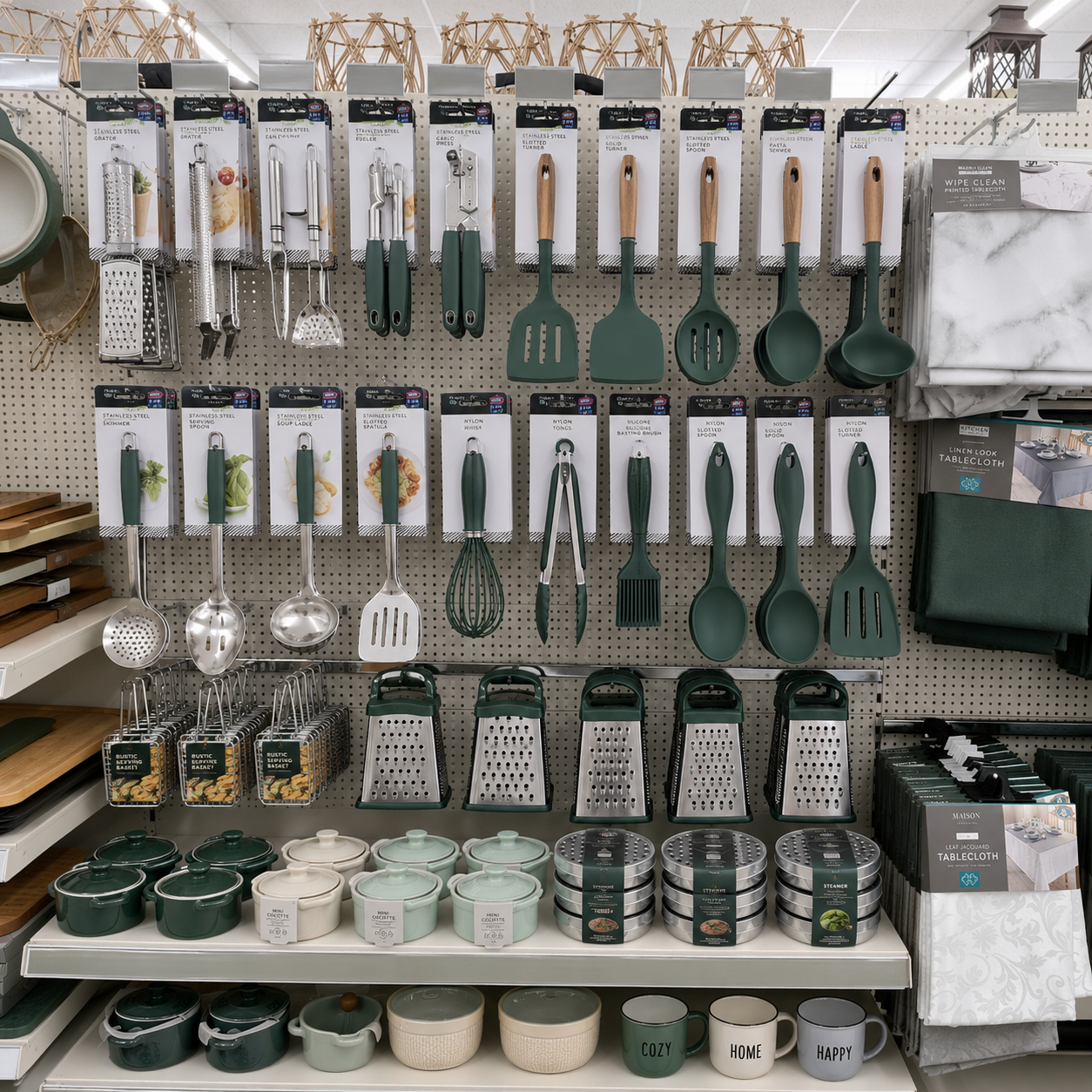 The product has been developed. The sample has been reviewed. The price has been discussed. Only then do people begin to focus on the box, sleeve, card, insert, label, or display tray.
 The product has been developed. The sample has been reviewed. The price has been discussed. Only then do people begin to focus on the box, sleeve, card, insert, label, or display tray.
But for kitchenware products, packaging does much more than complete the appearance.
It can affect shelf impact, transport protection, perceived value, buyer confidence, and customer experience. Even a well-designed product can lose strength in the market if the packaging feels unclear, weak, unsuitable, or disconnected from the retail channel.
That is why kitchenware packaging should not be treated as a decorative layer added at the end.
It is part of the product’s journey from factory to shelf to customer.
Packaging Shapes the Product Before It Reaches Retail
Before a kitchenware product appears on a store shelf, its packaging has already influenced how it is evaluated.
During sample review, buyers often check whether the product is properly protected, whether the packaging style fits the sales channel, and whether the presentation supports the target price level.
A silicone utensil set packed with a simple sleeve may feel practical and cost-efficient. The same set placed in a gift box may feel more suitable for seasonal promotions, home goods stores, or premium retail programs. A single stainless steel tong may work well on a hanging card, while a coordinated utensil set may need a color box or open display tray to show the complete assortment.
Different packaging formats create different product impressions:
Sleeve packaging can feel simple, light, and cost-efficient
Gift boxes can support seasonal, premium, or giftable programs
Hanging cards are often practical for single kitchen tools
Color boxes work well for sets and private label product lines
Open trays help customers see the full assortment clearly
There is no one packaging format that fits every product.
The key question is whether the packaging supports the product’s purpose, price point, and retail environment.
For kitchen tool packaging, this means the product and packaging should be considered together. A heavy tool needs secure fixing. A soft silicone product may need support to prevent deformation. A multi-piece set needs clear organization so customers can quickly understand what is included.
At Dingrow, packaging discussions often begin during product development, not after everything else is finished.
This usually leads to a more complete and retail-ready result.
Product Protection Affects the First Customer Impression
Packaging is visual, but protection is still one of its most important functions.
Weak boxes, loose inserts, moving tools, scratched surfaces, damaged corners, and poor product fixing can all affect how customers experience the product before they even use it.
Sometimes the kitchen tool itself has no problem.
But the packaging creates doubt.
A spatula set may arrive with small marks because the pieces moved during transport. A whisk may press against the box window and deform the package. A stainless steel tool may get scratched because it rubs against another component inside the same box.
Common packaging protection issues include:
Thin or weak outer boxes
Loose or unstable inserts
Tools moving inside the package
Scratched surfaces caused by contact during shipping
Dented corners or crushed packaging
Poor product fixing during transport
These problems may not always cause immediate returns.
But they can influence customer reviews, retailer confidence, and repeat orders.
For kitchenware buyers, packaging is not only about looking good. It is also about preventing avoidable complaints. A retail package must survive factory packing, export shipping, warehouse storage, shelf stocking, customer handling, and sometimes e-commerce delivery.
That is a long journey.
Small packaging improvements can make that journey safer and smoother.
Shelf Presentation Must Communicate Quickly
On a retail shelf, packaging only has a few seconds to attract attention.
Customers do not study every item carefully. They scan quickly. Product visibility, color, structure, logo position, and simple product information all influence whether they stop and take a closer look.
This is why retail kitchenware packaging needs clear communication.
A hanging card may need a clean front layout that keeps the tool visible. A color box may need a strong product image and direct benefit wording. A PDQ display or open tray may need consistent color blocking so the product line looks organized from a distance.
Effective shelf packaging usually communicates several points quickly:
What the product is
What benefit it offers
How the product looks or functions
Which brand it belongs to
Why it fits the customer’s kitchen
Different retail channels also require different packaging decisions.
Supermarkets often need compact packaging with clear and fast-reading information. Department stores may prefer a more giftable and refined presentation. Discount channels may need stronger price communication and durable packaging. Home goods stores may focus more on lifestyle feeling, color coordination, and shelf aesthetics.
Good packaging does not need to be loud.
But it should make the product easier to understand and easier to choose.
That is why retail-ready kitchenware often depends on packaging clarity as much as product design.
Private Label Packaging Needs a Consistent Line Identity
For private label kitchenware, packaging has an additional responsibility.
It helps build the identity of the product line.
A private label collection may include spatulas, ladles, tongs, whisks, measuring tools, kitchen shears, peelers, and other accessories. If each package uses different colors, fonts, layouts, claims, or photography styles, the line may feel disconnected.
For a private label range, consistency usually needs to appear in:
Logo placement
Color palette
Typography
Product naming style
Material and finish presentation
Photography style
Layout structure
Information hierarchy
Consistency helps buyers present the collection as one family.
This does not mean every package must look exactly the same. But the visual language should feel connected. The customer should be able to recognize that different SKUs belong to the same kitchenware range.
The same principle applies to the product inside the package.
If the packaging suggests a calm, modern, coordinated kitchenware line, but the tools inside have mismatched colors or inconsistent finishes, the overall impression becomes weaker.
At Dingrow, we have seen that packaging issues may not always look serious during early sampling. However, they can become more important when the buyer wants to expand from one item into a complete line.
The first package often sets the design language for everything that follows.
Buyers Look for Practical Packaging Details Before Approval
Before confirming kitchenware packaging, buyers usually want practical answers.
They need to know whether the product stays secure inside the package, whether the insert is strong enough, whether the package can handle shipping, and whether the information layout supports retail requirements.
Common buyer checks include:
Whether the product moves inside the package
Whether the insert can support the product properly
Whether the package provides enough shipping protection
Whether barcode placement is clear and scannable
Whether there is enough space for material details
Whether care instructions are easy to read
Whether private label branding has enough visibility
Whether the packaging format can be extended across multiple SKUs
Buyers may also consider whether the same packaging concept can support a wider product range in the future.
This matters because kitchenware sales are rarely driven by one factor alone. Product quality, price, packaging protection, shelf visibility, channel fit, and line consistency all work together.
Packaging cannot turn a weak product into a strong one by itself.
But good packaging can help a strong product arrive safely, communicate clearly, and feel ready for retail.
For brands and buyers developing a new kitchenware line, reviewing packaging format, protection, and shelf presentation early can make later sampling and retail discussions much smoother.
It can also prevent a good product from being limited by small presentation problems that could have been solved earlier.
In kitchenware, packaging is not only what holds the product.
It is part of how the product is understood, protected, displayed, and judged.


